Tirupati to Alappuzha Taxi for Ambalappuzha Sri Krishna Temple
The cab journey from Tirupati to Alappuzha takes about 13 to 14 hours and opens up the Ambalappuzha Krishna temple and the ancient Chengannur Mahadeva shrine.
Get a Taxi Quote on WhatsApp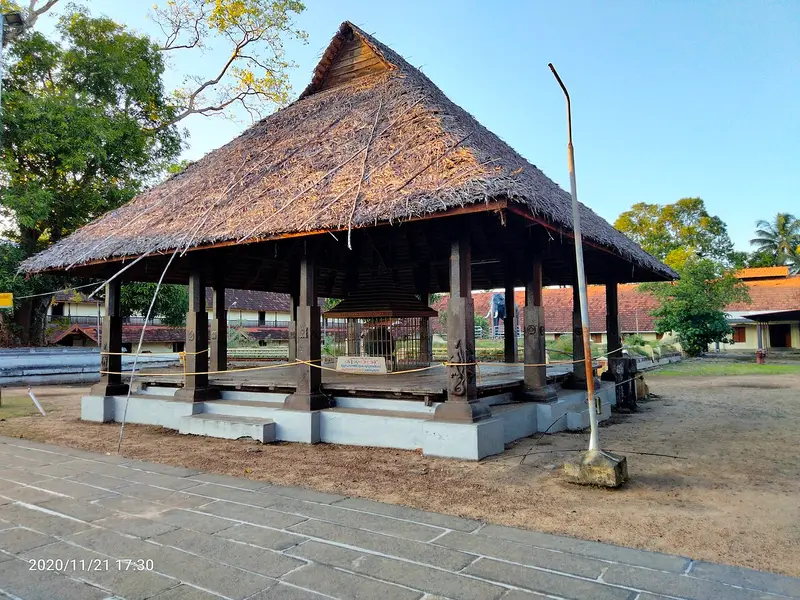
Photos: Vijayanrajapuram, CC BY-SA 4.0
- 690 kmDistance from Tirupati
- About 13 to 14 hours one way, plus breaksDrive time
- 3 days (2 nights) covering Ambalappuzha and ChengannurTotal trip time
- October to March is ideal. The June to September monsoon is intense in coastal Alappuzha, though the backwaters are at their fullest then.Best time
About the Ambalappuzha Sri Krishna temple
Ambalappuzha, a short drive south of Alappuzha town, houses one of Kerala's most loved Krishna temples. The deity here is Parthasarathi, Krishna as the charioteer of Arjuna, holding a whip and a conch, and the idol is closely associated with the Champakulam boat tradition that marks its installation. The temple is built in pure Kerala style around a large pond, and its atmosphere is gentle rather than grand.
The temple's fame rests on the palpayasam, a sweet milk porridge offered daily to the deity and distributed to devotees. A beloved legend explains it as the result of a chess wager between a king and Krishna disguised as a sage, with grains of rice doubling on each square of the board. Tasting the palpayasam is, for most pilgrims, the heart of the Ambalappuzha visit; it is prepared in limited quantity, so ask at the counter early in the day.
History and the Chengannur Mahadeva temple
Tradition also records that the idol of Guruvayurappan was brought to Ambalappuzha for safekeeping during Tipu Sultan's raids on Malabar in the late 18th century and kept here for years, a link that still binds the two temples in devotees' minds. The Ottan Thullal performance art is said to have been first staged in this temple precinct by the poet Kunchan Nambiar.
Chengannur Mahadeva temple, about 30 km inland, is one of the great old shrines of central Travancore, where Shiva and Parvati are worshipped in facing shrines within one complex. The temple is known for its Thriputharattu tradition connected with the goddess, a periodic observance treated by devotees with reverence and ceremony; visitors should simply be aware that the Devi shrine closes at such times and reopens with a festive bath procession. We mention it briefly and respectfully, and the temple staff can explain the custom to those interested.
Chengannur is also a gateway town for the Sabarimala pilgrimage season and sits close to Aranmula, so this corridor sees heavy pilgrim movement between November and January.
What to see in and around Alappuzha
Alappuzha is the centre of Kerala's backwater country, and a houseboat or a short motorboat ride on the Punnamada lake side makes a natural companion to the temple day. The beach and the old lighthouse are close to town for an easy evening.
Within pilgrimage range are Haripad and the Mannarasala serpent temple to the south, and Chettikulangara Devi temple near Mavelikkara, famous for its Kettukazhcha festival structures. With a cab you can thread two or three of these into the middle day without backtracking.
How the Tirupati to Alappuzha trip works with a cab
The standard route is Tirupati to Vellore, Salem and Coimbatore, through the Palakkad gap, then down past Thrissur, Ernakulam and Cherthala to Alappuzha. At about 690 km, this is a 13 to 14 hour driving day, so the first day is spent entirely on the road with an early start around 3:30 AM.
You book your own hotel, in Alappuzha town for the backwaters or closer to Ambalappuzha for the temple; we provide the taxi and driver throughout. Day 2 usually runs Ambalappuzha in the morning for darshan and palpayasam, Chengannur in the evening session, and day 3 is the return to Tirupati.
All darshan, offerings and the palpayasam itself are arranged by you directly with the temples and their Devaswom boards. We stay out of temple transactions by policy, and the driver will guide you only on parking and timing.
Practical tips for pilgrims
If the palpayasam matters to your group, reach Ambalappuzha in the morning session and enquire immediately, as distribution can end when the day's preparation runs out. Festival days change both availability and queues.
The coastal heat is humid year-round, so cotton traditional wear is the most comfortable choice. If your trip overlaps the Sabarimala season, expect dense traffic around Chengannur and plan extra time on the middle day.
Timings, rules and special arrangements at the temple can change. Please confirm locally before you travel. This page was last checked in November 2026.
Timings and dress code
- Timings
- Commonly listed as roughly 4:30 AM to noon and 5 PM to 8 PM with a midday break, but timings change on festival days. Confirm locally or with the Devaswom board before you go.
- Dress code
- Traditional dress is required. Men wear a mundu or dhoti, going bare-chested in many inner areas; women wear a saree, set mundu or churidar. Western clothing is generally not permitted inside, and some Kerala temples restrict entry to Hindus, so confirm the rule at each temple before visiting.
Last checked November 2026. Timings and rules can change, so please confirm locally. We provide taxi service only. Temple entry and any tickets are arranged by the pilgrim directly with the temple.
Sample plan
- Day 1, 3:30 AMDepart TirupatiFull travel day; breakfast near Salem, lunch near Palakkad.
- Day 1, 7:00 PMArrive Alappuzha and check inHotel of your own choosing; rest after the long run.
- Day 2, 6:00 AMAmbalappuzha Sri Krishna templeMorning darshan; ask about palpayasam at the counter, handled by you.
- Day 2, 11:00 AMBackwater outing or restOptional boat ride while the temples are closed midday.
- Day 2, 4:30 PMChengannur Mahadeva templeAbout 30 km inland; evening darshan of Shiva and Parvati.
- Day 2, 8:00 PMReturn to the hotelDinner in Alappuzha or Chengannur.
- Day 3, 6:00 AMStart the return journeySame corridor northbound; two meal halts.
- Day 3, 9:30 PMReach TirupatiArrival time moves with traffic near Coimbatore and Vellore.
Taxi cost by vehicle
About 1380 km round trip, billed on 1380 km (3 days at a 300 km daily minimum) at the per-km rate. Vehicle, driver and fuel are included.
Toll, parking, checkpost tax and invoice tax are extra. Overnight driver stay on multi-day trips is extra.
Book on WhatsAppTempo Traveller and Urbania for Tirupati to Alappuzha
Group pilgrimages are what we run most on this route. A 12 or 16 seater Tempo Traveller from Tirupati keeps the whole family together with pushback seats and proper luggage space, and works out cheaper per person than taking two cars. For long highway stretches, the Force Urbania luxury van adds captain-style seating, better suspension and USB charging at every seat, which makes a real difference on a 1380 km round trip.
Exact Tempo Traveller and Urbania fares for Tirupati to Alappuzha are in the table above. Smaller families can pick the Dzire, Ertiga or Innova Crysta on the same trip plan; see the fleet and tariff page to compare all seven vehicles.
Frequently asked questions
How far is Alappuzha from Tirupati by taxi?
Around 690 km one way via Salem, Coimbatore, Palakkad and Ernakulam, which translates to about 13 to 14 hours of driving plus halts. Day 1 of the plan is purely a travel day.
What are the timings at Ambalappuzha and Chengannur temples?
Commonly listed as roughly 4:30 AM to noon and 5 PM to 8 PM with a midday break, but festival days and special observances change the schedule. Confirm locally or with the Devaswom board before you go.
How many days should we plan for this trip?
Three days with two nights: travel days on either side and a middle day for Ambalappuzha in the morning and Chengannur in the evening, with a backwater break in between if you like.
What is the dress code at these temples?
Men wear a mundu or dhoti and go without a shirt in many inner areas; women wear a saree, set mundu or churidar. Western wear is generally not allowed, and entry rules for non-Hindus vary by temple, so check locally.
Which cab is right for a family on this route?
Four or fewer travel comfortably in a sedan; an Innova-type SUV is better for five to seven and for seniors over a 14-hour day. Larger pilgrim groups should ask for a tempo traveller.