Tirupati to Samalkot Taxi for Kumararama Bhimeswara Temple
A three-day cab trip from Tirupati to Samalkot near Kakinada, about 11 to 12 hours of driving each way to the Kumararama Pancharama kshetra.
Get a Taxi Quote on WhatsApp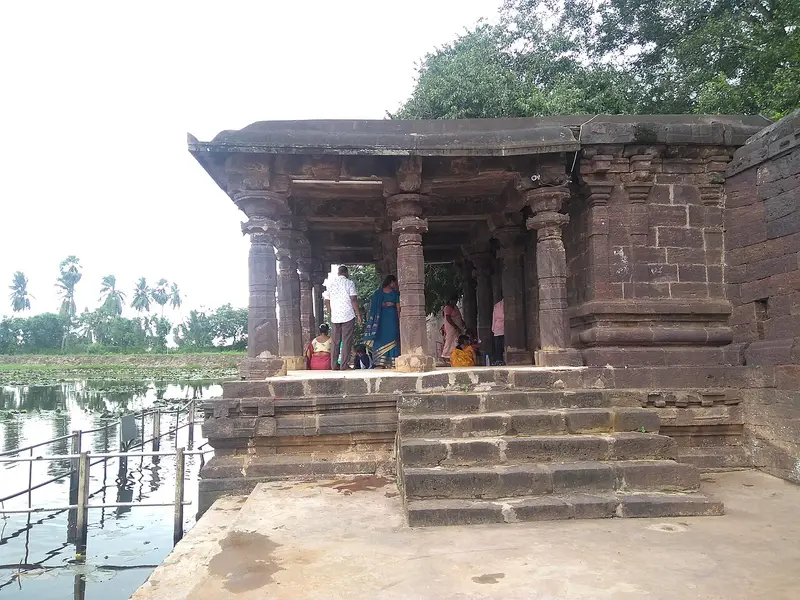
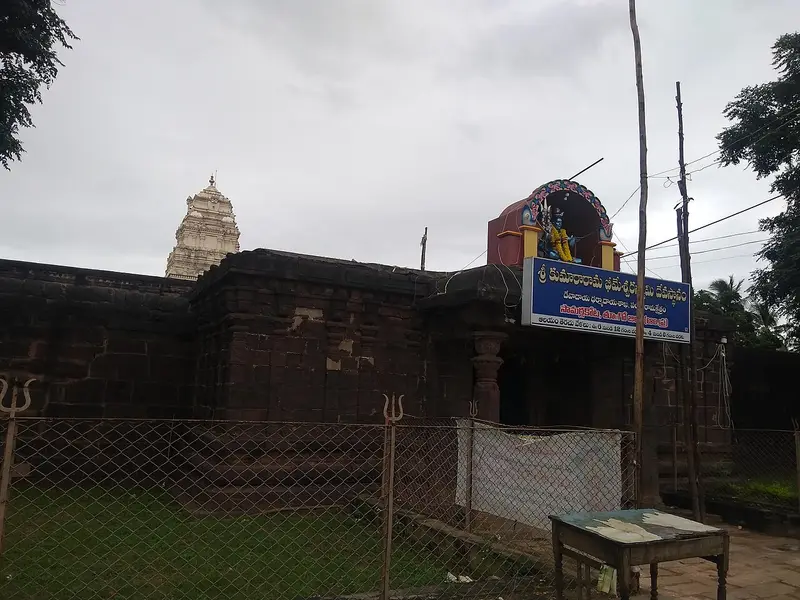
Photos: Divya Talla, CC BY-SA 4.0; Divya Talla, CC BY-SA 4.0
- 600 kmDistance from Tirupati
- About 11 to 12 hours one way, plus breaksDrive time
- 3 days with two nights, usually at Kakinada or RajahmundryTotal trip time
- October to February is the pleasant window on the coast. April to June is very hot and humid; Maha Shivaratri is the peak festival here.Best time
About the Kumararama Bhimeswara temple, Samalkot
Samalkot, a railway town a few kilometres from Kakinada in the Godavari delta, holds the Kumararama Bhimeswara Swamy temple, one of the five Pancharama kshetras of Andhra Pradesh. In the Pancharama tradition, the giant Shiva linga worshipped by the demon Tarakasura was split into five by Kumara Swamy during their battle, and the pieces were consecrated at Amararama in Amaravati, Draksharama, Somarama in Bhimavaram, Ksheerarama in Palakollu and here at Kumararama.
This kshetram takes its name from Kumara Swamy himself, who tradition says installed the linga at this spot, making it the Pancharama most directly tied to the warrior god of the legend. The temple stands in the Bhimavaram locality of Samalkot, and pilgrims booking a Tirupati to Samalkot taxi usually pair it with Draksharamam, barely an hour away, to finish the eastern half of the circuit.
History and architecture
The structural temple is credited to the Eastern Chalukya ruler Chalukya Bhima around the turn of the 9th and 10th centuries, which is why the deity is called Bhimeswara, and later dynasties of the coast added to the complex. Its design closely mirrors the great temple at Draksharamam, built under the same royal house, and historians often describe the two as sister temples; the dates, as with all living shrines, are indicative.
The sanctum is built on two levels, and the linga is a tall shaft of pale limestone that rises from the ground floor through an opening to the upper storey, where the main worship takes place. Pilgrims climb to the upper level for darshan and walk the enclosed pradakshina passage. The complex includes a pillared kalyana mandapa, shrines of the goddess Bala Tripura Sundari and other deities, and a temple tank, with carved stone work that rewards unhurried viewing.
What to see in and around Samalkot
The temple itself is a half-day visit done properly: the two-storey sanctum, the mandapas and the tank. Samalkot town is compact, and Kakinada, around 15 km away, is the natural base with hotels, the seafront and the famous kaja sweet shops that most Telugu pilgrims refuse to skip.
Within easy reach are the other highlights of the eastern delta. Draksharamam, the Pancharama and Shakti Peetha, lies about an hour south-west. Annavaram, with the Satyanarayana Swamy hill temple, sits right on NH16 about 45 minutes north and is one of the most visited temples in Andhra. Pithapuram, an old Shakti and Dattatreya kshetram, is a short hop north of Samalkot. A full day from Kakinada can comfortably cover Samalkot, Draksharamam and one of these.
How the Tirupati to Samalkot trip works with a cab
The route runs up the coastal corridor: Tirupati to Naidupeta, then NH16 through Nellore, Ongole, Vijayawada and Rajahmundry, continuing towards Kakinada with Samalkot just off the highway. Published figures put the distance near 600 km one way, which translates to about 11 to 12 hours of driving with proper breaks. Your driver may use the Kakinada spur or district roads for the final approach depending on traffic.
The comfortable shape is three days. Day one is the drive north with a night at Kakinada or Rajahmundry, booked by you. Day two covers Kumararama in the morning and Draksharamam or Annavaram after lunch, returning to the same hotel. Day three is the return drive to Tirupati. We provide the taxi and driver only; hotels, meals and temple arrangements are the traveller's own.
Inside the temples, entry, queues and any abhishekam or seva tickets are handled by you directly with each temple office. We do not arrange darshan; the cab drops you at the temple, waits, and moves you between shrines on your schedule.
Practical tips for pilgrims
Darshan at the upper level means a flight of stairs, so give elders time and avoid the midday heat on the stone. The temple's long afternoon closure is standard for the delta, so plan sanctum visits inside the morning or evening sessions.
Fuel, food and hotels are easiest at Kakinada and Rajahmundry; the NH16 stretch has reliable highway restaurants near Ongole and Vijayawada for the travel days. Shivaratri brings very large crowds and local traffic controls around the temple, so add buffer time if you travel then.
Timings, rules and special arrangements at the temple can change. Please confirm locally before you travel. This page was last checked in November 2026.
Timings and dress code
- Timings
- Commonly listed as roughly 6 AM to 12 noon and 4 PM to 8 PM, but timings change on festival days. Confirm locally or on the temple's official/endowments website before you go.
- Dress code
- Modest covered clothing is expected, and several AP and Telangana temples encourage traditional wear such as dhoti or saree. Confirm current practice at the temple.
Last checked November 2026. Timings and rules can change, so please confirm locally. We provide taxi service only. Temple entry and any tickets are arranged by the pilgrim directly with the temple.
Sample plan
- Day 1, 4:30 AMLeave TirupatiNH16 all the way north; breakfast near Nellore, lunch near Vijayawada.
- Day 1, 6:00 PMArrive Kakinada or RajahmundryNight halt at the hotel you booked.
- Day 2, 7:00 AMKumararama temple, SamalkotMorning darshan of the two-storey limestone linga; entry handled by you directly.
- Day 2, 11:30 AMLunch at KakinadaTry the town's famous kaja before the afternoon leg.
- Day 2, 2:30 PMDraksharamam or AnnavaramPick one companion temple for the afternoon session.
- Day 2, 7:30 PMBack at the hotelRest ahead of the long return day.
- Day 3, 6:00 AMStart the return driveLunch near Vijayawada; steady run down NH16.
- Day 3, 7:30 PMBack in TirupatiArrival depends on breaks and evening traffic.
Taxi cost by vehicle
About 1200 km round trip, billed on 1200 km (3 days at a 300 km daily minimum) at the per-km rate. Vehicle, driver and fuel are included.
Toll, parking, checkpost tax and invoice tax are extra. Overnight driver stay on multi-day trips is extra.
Book on WhatsAppTempo Traveller and Urbania for Tirupati to Samalkot
Group pilgrimages are what we run most on this route. A 12 or 16 seater Tempo Traveller from Tirupati keeps the whole family together with pushback seats and proper luggage space, and works out cheaper per person than taking two cars. For long highway stretches, the Force Urbania luxury van adds captain-style seating, better suspension and USB charging at every seat, which makes a real difference on a 1200 km round trip.
Exact Tempo Traveller and Urbania fares for Tirupati to Samalkot are in the table above. Smaller families can pick the Dzire, Ertiga or Innova Crysta on the same trip plan; see the fleet and tariff page to compare all seven vehicles.
Frequently asked questions
How far is Samalkot from Tirupati by road?
Samalkot is roughly 600 km one way from Tirupati along NH16 via Vijayawada and Rajahmundry, which means about 11 to 12 hours of driving plus breaks and around 1200 km for the round trip.
What are the Kumararama temple timings?
Commonly listed as roughly 6 AM to 12 noon and 4 PM to 8 PM, but timings change on festival days like Maha Shivaratri. Confirm locally or on the endowments department website before you travel.
How many days should I keep for the Samalkot trip?
Three days works best: a driving day each way plus a middle day for Kumararama along with Draksharamam or Annavaram. You book your own nights at Kakinada or Rajahmundry; we supply the cab and driver.
What dress code applies at the Kumararama temple?
Modest covered clothing is expected, and traditional wear such as dhoti or saree is encouraged at the Pancharama shrines. Footwear stays outside; confirm camera and phone rules at the temple.
Which cab suits a group heading to Samalkot?
Up to four passengers travel fine in a sedan, but the 600 km leg favours an Innova-type MPV for five to seven people or when seniors are along. Larger groups should consider a tempo traveller.